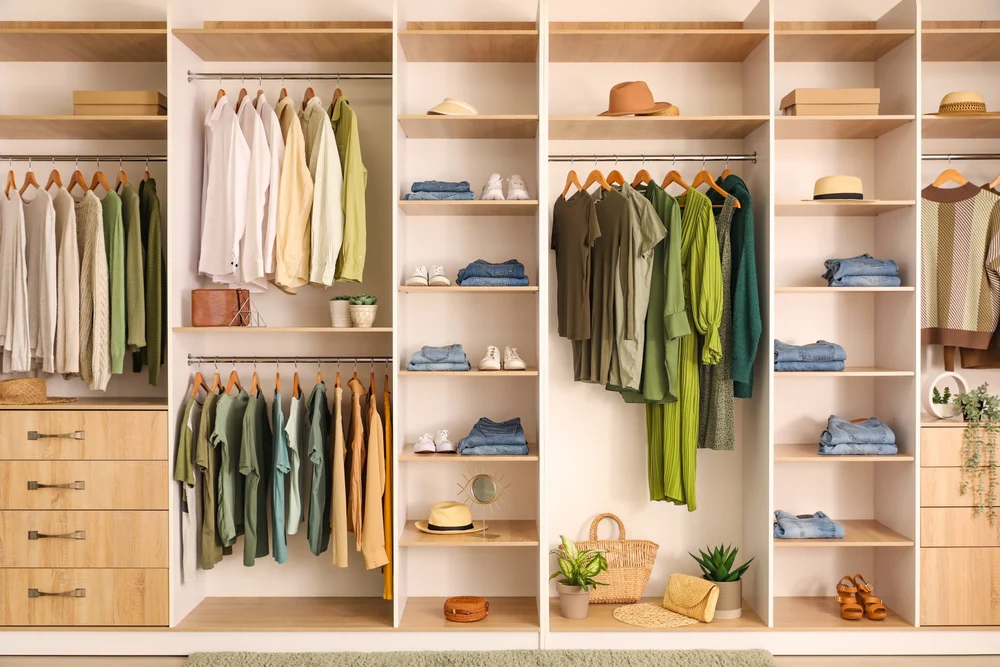
A capsule wardrobe helps you simplify clothing choices, reduce clutter, and save time. It focuses on having fewer, high-quality pieces that work well together. If you want to dress better with less effort, this guide breaks down each step clearly.
At its core, a capsule wardrobe has around 25 to 50 items. These include tops, bottoms, outerwear, and shoes. You exclude workout clothes, sleepwear, and formal wear unless you use them daily. The idea is to wear every item regularly.
Neon shapes in fashion design have taught minimalists that fewer options often lead to smarter choices. Just like design, your wardrobe benefits from structure, function, and intention.
Why Build a Capsule Wardrobe?
Capsule wardrobes bring clarity to your lifestyle. You’ll save money and avoid buying clothes that don’t match your needs. You’ll also spend less time choosing what to wear.
Most people wear 20% of their clothes 80% of the time. This shows how much waste sits in closets. When you build a capsule wardrobe, every piece earns its place. You stop buying random sale items. You only keep what fits well and matches other pieces.
Capsule wardrobes also help with decision fatigue. You start your day with less stress. Outfits come together faster. You gain mental space for more important decisions.
Step 1: Define Your Lifestyle Needs
Start by listing your weekly routine. Include work, casual outings, exercise, and any formal events. This tells you what types of clothes you actually need.
For example:
- Office worker: 3–4 dress shirts, 2 trousers, 1 blazer
- Remote worker: 3 tops, 2 comfortable pants
- Social weekends: 2 casual shirts, 1 pair of jeans
Think about your environment. A person living in a warm climate needs different pieces than someone in a colder region. Avoid general wardrobe advice. Focus on your lifestyle.
Organised Everyday recommends tracking what you wear for 7 days before building your wardrobe. This helps you see your real needs, not guesses.
Step 2: Choose a Neutral Color Palette
Neutral colors create the base for easy mixing. Start with black, white, navy, grey, or beige. These tones pair well with nearly any color or style.
Avoid bright trends unless they truly reflect your taste. You can add a pop of color later once you build the core.
Pick 2–3 base colors, 1–2 accent colors, and stick to them. This helps you match tops, bottoms, and shoes effortlessly.
Examples:
- Base: White, navy
- Accent: Olive, mustard
Step 3: Start with Core Items
Focus on pieces that match multiple outfits. These core items will do the heavy lifting.
Suggested basics:
- 3–5 solid tops (crew neck, V-neck, or button-down)
- 2–3 bottoms (jeans, chinos, skirts)
- 1–2 outerwear (cardigan, jacket)
- 1 blazer or coat
- 2–3 pairs of shoes (casual, work, seasonal)
Choose quality fabrics like cotton, linen, or wool blends. Don’t aim for quantity. Aim for fit, comfort, and wearability.
Step 4: Remove What Doesn’t Work
Clear your closet before you add anything. Take out anything:
- You haven’t worn in 6 months
- That doesn’t fit or feel right
- That’s worn out or unrepairable
Donate or recycle what you don’t use. Be honest. Keeping items out of guilt or false hopes creates clutter.
Business Attract emphasizes using a simple rule: “Would I buy this today?” If the answer is no, let it go.
Step 5: Track and Adjust Over Time
Your capsule wardrobe evolves. Keep track of what you wear most and least. If a piece remains unused for weeks, replace it.
Update seasonally. Add layers in winter. Swap for lighter fabrics in summer. Use storage boxes to rotate items as needed.
Capsule wardrobes are not rigid. They adapt as your lifestyle changes. What matters is that every piece serves a real purpose.
Step 6: Avoid Common Mistakes
Some people overbuy basics and forget variety. Others focus too much on aesthetics and ignore comfort.
Avoid these pitfalls:
- Following social media trends without checking practicality
- Keeping items just because they were expensive
- Choosing poor-quality fabrics to “fill gaps”
Also, don’t confuse a capsule wardrobe with minimalism. You don’t need to cut everything down to 10 items. You just need consistency.
Guardian Ideas highlights that practicality always wins over perfection when it comes to lifestyle systems, and wardrobes are no different.
Step 7: Create Outfit Combinations
Once you have your capsule pieces, start mixing them. Try to create 10 to 15 combinations using 8 to 10 items. This will show you how well your items work together.
Use apps or take photos to save your favorite looks. This also helps during busy mornings when you need to decide quickly.
You’ll also start noticing what’s missing. Maybe a white shirt or a light jacket would add more options. Make a note and add it thoughtfully.
Final Thoughts
Building a capsule wardrobe isn’t about restricting your style. It’s about making it easier to get dressed, feel confident, and reduce waste. You’ll spend less money and make better fashion choices.
The goal isn’t to copy someone else’s closet. It’s to build your own with intention.