
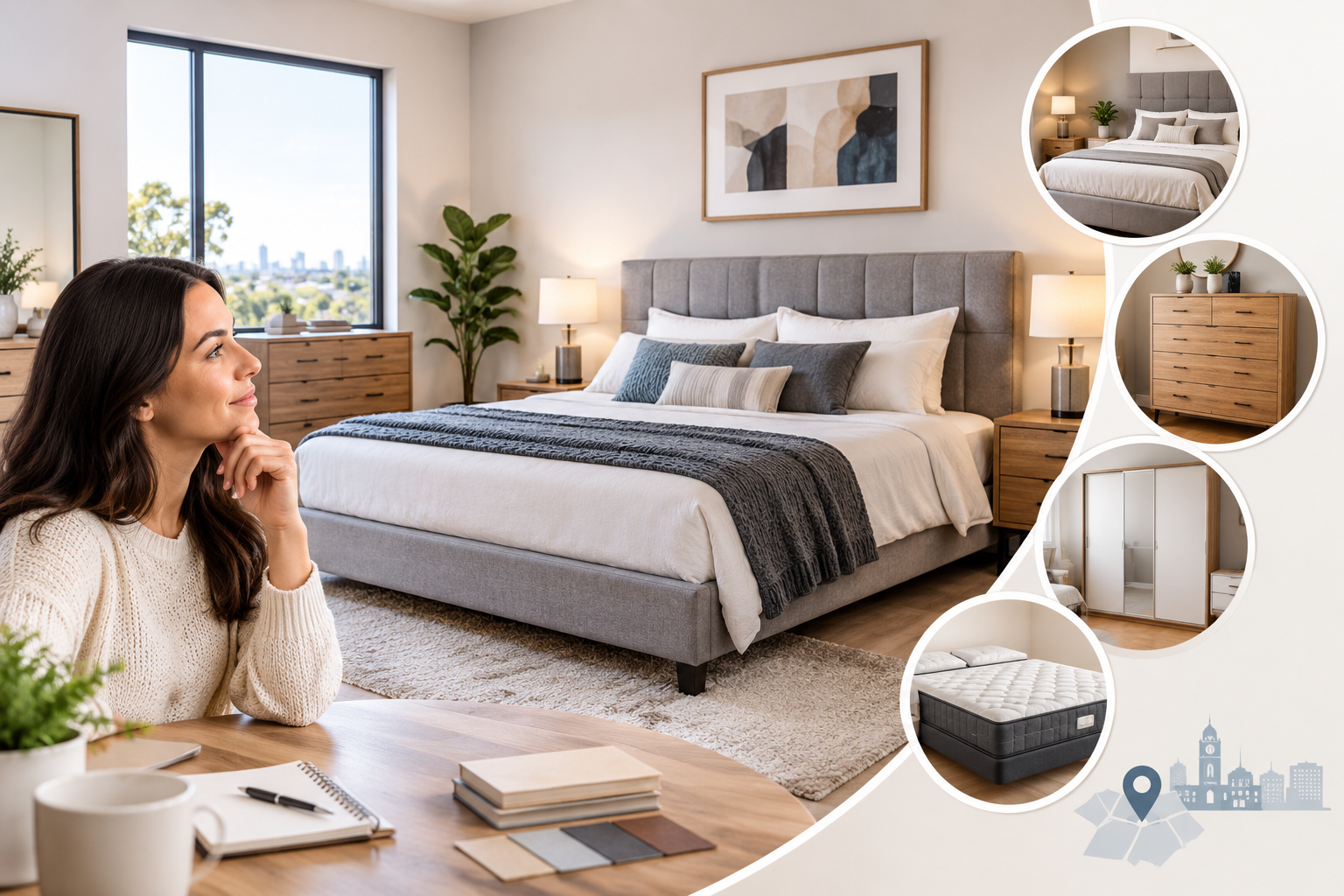
Bedroom furniture has to work harder than almost anything else in your home, it needs to fit the room, suit how you actually live, and hold up to years of daily use. This guide covers what to check before buying bedroom furniture in Dandenong, from sizing your room correctly to choosing materials and storage that’ll actually last. By the end, you’ll know what to look for so you can furnish a bedroom that works for your space.
What Types of Bedroom Furniture Do You Need?
Before you start picking finishes and styles, it helps to know what pieces you actually need versus what you’re just tempted to add.
The Basics
Every bedroom starts with sturdy bed frames and comfortable mattresses, the pieces everything else gets planned around. From there, most rooms call for sleek bedside tables, useful for a lamp, alarm clock, or whatever you keep within reach at night.
If your room doesn’t already have built-in storage, compact tallboys are worth considering too, since it’s often the single biggest factor in how organised the room feels day to day.
Beyond Basics
Beyond the basics, some rooms benefit from a few additions if you have space. A high-capacity dresser or dressing table gives you a dedicated spot for getting ready, a bench seat at the foot of the bed adds a place to sit while dressing, and decorative mirrors can make a smaller room feel more open. None of these are essential, but they’re worth considering if you’ve got the space.
How Do You Measure Your Room Before Buying Bedroom Furniture?
Getting the measurements right before you buy saves you from the headache of returning furniture that doesn’t fit, or worse, realising it doesn’t fit after delivery. A few of the pointers below draw on measuring tips from Melbourne-based designer The Design Basics’ guide.
- Room dimensions first: Start with the overall room size, then map out where the bed will sit, since that’s usually the anchor point everything else gets arranged around.
- Walking space: Aim for roughly 90cm of clearance for main walkways, and 60- 75 cm is generally enough for less-used paths.
- Doorways and hallways: Measure the width and height of doorways and hallways the furniture needs to pass through, and check which way doors swing so they don’t block a piece once it’s placed.
- Wall space for storage: For dressers and tallboys, measure the wall space you plan to use, including height if you have sloped ceilings or low windows nearby.
- Diagonal depth for large pieces: For bigger items like bed frames, measure diagonally rather than just width and height. This tells you whether the piece can actually be tilted through a doorway, not just carried in flat.
- Drawer and door clearance: Check how far drawers and wardrobe doors swing open. A piece that fits flush against the wall can still cause problems if there’s nothing left to actually open it.
- Sketch a floor plan: If you’re buying multiple pieces, even a rough sketch helps you see how everything fits together before committing to individual items.
Get these measurements sorted early, and the rest of the decisions- materials, storage, style- become a lot easier to make with confidence.
What Materials Should You Choose for Bedroom Furniture?
The material affects how furniture looks, how it holds up, and how much maintenance it needs, and in Australian homes, climate plays a bigger role in that decision than people expect.
- Solid timber: Durable and long-lasting, with a natural look that suits both classic and modern Australian homes. It handles humidity and temperature swings better than engineered wood, which makes it a solid choice for homes without ducted climate control. It costs more upfront but holds up well over years of daily use. If you’re weighing up finishes, it’s worth looking at a few solid timber bedroom pieces side by side before deciding.
- MDF or engineered wood: More affordable and often finished with a veneer or laminate. It’s lighter to move and easier on the budget, but more sensitive to moisture, so it’s worth being mindful of in humid coastal areas or rooms prone to condensation.
- Upholstered frames: Common on bed frames and headboards, adding a softer look and feel to the room. High-quality upholstered bed frames use dense padding and a sturdy frame underneath, so the softness holds up rather than flattening out. Fabric upholstery breathes better in Australia’s warmer months, while leather or leatherette wipes clean easily but can feel warm to the touch in summer.
- Metal frames: Sturdy, affordable, and low-maintenance, with a leaner look that suits smaller or modern spaces. Bed frames hold up well in Australian conditions and don’t warp or swell the way timber can in humid areas.
Matching materials across pieces isn’t essential, but sticking to one or two finishes, whether that’s timber tones or a colour palette, helps the room feel put together rather than mismatched.
How Much Storage Do You Actually Need?
Storage needs vary a lot depending on room size and how many people share it, but a few land-down-under-specific factors, such as spacious bedside tables, are worth thinking about too.
- Wardrobe space: Many older Australian homes have smaller built-in robes than newer builds, so a freestanding wardrobe often makes up the difference if you’re short on hanging space.
- Seasonal wardrobe swaps: With Australia’s shift between hot summers and cooler winters, extra drawer space helps if you rotate lighter and heavier clothing rather than keeping everything out year-round.
- Under-bed storage: A practical option in smaller apartments or units, especially in inner-city areas where floor space comes at a premium.
- Tallboy vs chest of drawers: Tallboys make better use of vertical space, which suits smaller bedrooms, and also serve as a wider chest of drawers, which works well if you’ve got the floor space to spare.
- Bedside storage: Even one or two drawers per bedside table adds up, useful for keeping smaller items out of sight without needing a separate cabinet.
There’s no single right amount of storage; it comes down to how much you’re working with and how you actually use the space day to day.
How Do You Match Styles Across Bedroom Pieces?
A bedroom feels put together when the pieces share a common thread, even if they’re not an exact matching set.
- Pick a dominant finish: Choose one main timber tone, colour, or material and build around it. If your bed frame is a warm oak, look for bedside tables and a tallboy in a similar tone rather than mixing several different woods.
- Use a bedroom suite as a shortcut: If style-matching feels like too much guesswork, coordinated and consistent bedroom suites take care of it for you, since the bed, tallboy, and bedside tables are designed together from the start.
- Match hardware where you can: Drawer handles and legs are small details, but consistent metal finishes (brass, black, or brushed steel) across pieces make a bigger visual difference than people expect.
- Balance scale: Large upholstered beds paired with delicate, spindly bedside tables can look mismatched. Keep the visual weight of your pieces roughly similar.
- Leave room for contrast: You don’t need everything to match exactly. A statement mirror or an accent chair in a different finish can add character without breaking the overall look.
The goal is to make sure nothing looks like it wandered in from a different room.
Final Thoughts
Bedroom furniture works best when it’s chosen around how you actually live, not just how it looks in a showroom. Get the measurements, materials, and storage right, and the styling almost takes care of itself. If you’re in the area, our Dandenong showroom has a full range on display to look through in person before you decide.
FAQs
- How do I know what size bed frame will fit my room?
Measure your room’s length and width, then map out clearance space around the bed, ideally 60-70cm on each side. Compare this against the bed frame’s listed dimensions before buying, not just the mattress size.
- What’s the most durable material for bedroom furniture?
Solid timber tends to hold up best over time, especially in Australian conditions where humidity and temperature shifts can affect engineered wood. It costs more upfront but lasts significantly longer with regular use.
- Is it better to buy a matching bedroom suite or individual pieces?
A bedroom suite is easier if you want a coordinated look without the guesswork, since the pieces are designed to match. Buying individually gives you more flexibility, but it takes more effort to keep the styling consistent.
- How much storage do I actually need in a bedroom?
It depends on your wardrobe space and how much clothing you’re storing. A tallboy or chest of drawers helps fill the gap if your built-in robe is limited, which is common in a lot of older Australian homes.
- Can I mix different wood tones in a bedroom?
It’s possible, but it’s safer to stick to one or two complementary tones so the room doesn’t feel disjointed. If you want variety, keep it to accent pieces rather than the main furniture.
- Do I need a headboard, or is it optional?
A headboard is optional, but it does add back support if you sit up in bed to read or watch TV. It also protects the wall from marks over time, so it’s worth considering even if it’s mainly for practical reasons.
- What’s the difference between a tallboy and a dresser?
A tallboy is taller and narrower, making better use of vertical space in smaller rooms. A dresser is wider and lower, often paired with a mirror, and works better where floor space isn’t as tight.
- How often should I replace bedroom furniture?
Well-made bedroom furniture, especially solid timber pieces, can last well over a decade with normal use. Replacement usually comes down to changing needs or wear, rather than a fixed timeframe.