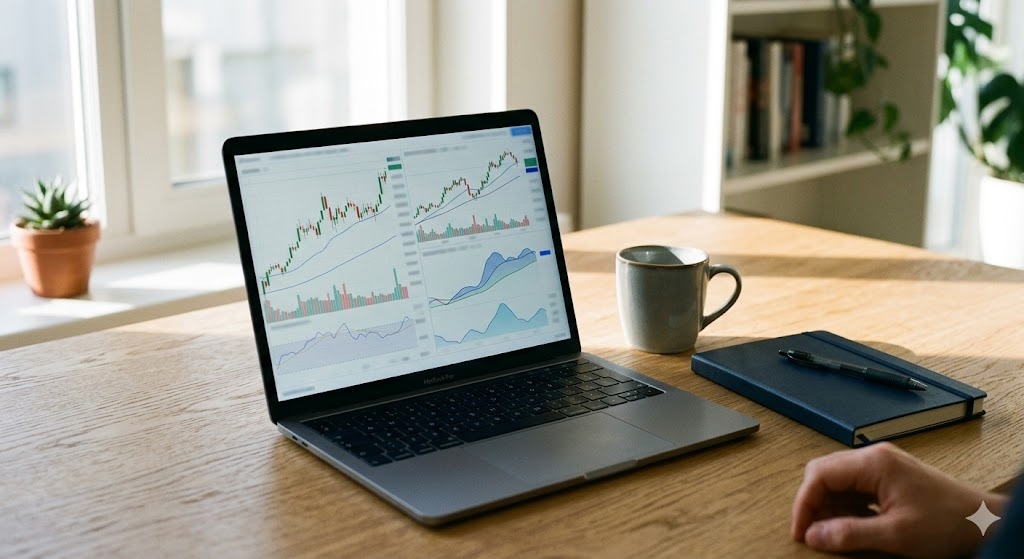
You check your phone during a coffee break, glance at a currency chart, and somehow the euro has moved while you were answering a message. A headline dropped, traders reacted, and the price did its little nervous dance. That is the part of currency trading that always pulled me in. It feels fast, messy, and oddly human. Now AI sits in the middle of that mess, trying to read it faster than you can blink.
Why AI Ended Up in Currency Trading
Currency markets were never calm places. Even before AI became the fashionable answer to everything, traders were already using software to scan charts, test ideas, and react to price moves.
The shift makes sense when you think about it. Currencies move because people, banks, funds, governments, and nervous investors all react at once.
Speed Changed the Game
A person can look at a chart and make a judgment. A machine can scan several pairs, compare patterns, check old setups, and react before you finish deciding whether the move is real.
That speed is useful. But it can also make trading feel less patient. You start expecting every setup to appear neatly, and markets rarely behave that politely.
Patterns Became Easier to Test
Back when retail trading apps started getting popular around the smartphone boom, many people guessed more than they tested. Now, even casual traders can run older price data through tools and see whether an idea had any chance.
Honestly, that part is underrated. A bad strategy looks much less romantic after you test it against a few ugly market weeks.
The Human Bit Did Not Vanish
People still panic. People still chase. People still close a trade too early because lunch is getting cold.
AI can process market behaviour, but it does not magically remove human habits. You still decide what to trust, what to ignore, and when to stop.
The Opportunities People Actually Notice
The best use of AI in trading is not always some dramatic robot making money while you sleep. That sounds nice, sure, but real life is more awkward.
Most useful AI tools help with boring things. And boring things matter.
Better Market Scanning
Imagine watching a quiet pound-dollar chart on a rainy Monday morning. Nothing much happens. Then another pair starts moving because of a central bank comment.
You may miss it. A tool probably will not.
That is where ai currency trading starts to feel practical, not flashy. It can help spot movement, compare conditions, and bring possible setups to your attention.
Less Emotional Entry Points
You know that feeling when a candle suddenly jumps and your hand moves before your brain catches up? AI can help slow that down, weirdly enough.
Not because it has wisdom. It simply follows rules without getting excited. If your setup is not there, it does not care how tempting the chart looks.
Learning From Repetition
Currency trading repeats itself, but not perfectly. That is the annoying part.
AI can help you study repeated behaviours: price reactions near support, breakouts that fail, or the way a pair moves after a major announcement. You start seeing what usually happens, what sometimes happens, and what you only imagined was happening.
And yes, that can be humbling.
Where AI Still Runs Into Walls
Some people talk about AI like it has cracked the market. I do not buy that. To be fair, it has improved a lot of trading workflows, but the market is not a puzzle with a final answer.
Currency prices react to surprise. Surprise is not exactly easy to code.
News Can Break the Pattern
A chart may look clean at breakfast. By lunch, a policy comment or unexpected data release can wreck the whole setup.
AI can read news faster than you. But reading is not the same as understanding what traders will care about that day. Sometimes the market ignores what looks important. Sometimes it overreacts to a sentence buried in a speech.
That is where judgement still matters.
Bad Data Creates Bad Confidence
If a tool studies poor data, it can give polished nonsense. That sounds harsh, but it happens.
You might see a strategy that worked beautifully in calm conditions, then falls apart during a messy week. The backtest looked neat. The real market did not care.
At some point, every trader learns that clean historical examples can be a little too comforting.
Automation Can Make People Lazy
This is my pet peeve. Some traders stop thinking once a tool gives them a signal.
A signal is not a personality. It does not know your risk tolerance, your rent, your stress level, or whether you are trading because you are bored. You still need a plan, even if the software looks clever.
A More Realistic Way to Use AI
AI works better as an assistant than a replacement. That may sound less exciting, but it is closer to reality.
You can let it scan, organise, test, and alert. You should still decide.
Start With Clear Rules
A vague trading idea becomes dangerous when you automate it. “Buy when the market looks strong” is not a rule. It is a mood.
Better rules are plain. What pair are you watching? What condition matters? Where are you wrong? When do you leave the trade alone?
The simpler the rule, the easier it is to see whether AI is helping or just adding noise.
Keep a Manual Eye on Context
Say a currency pair has been quiet all week, then suddenly moves before a major announcement. A tool might flag momentum. You might know the move is fragile because everyone is waiting.
That kind of context matters. AI can help you notice the move, but you still need to ask why it is happening now.
Do Not Treat It Like Magic
For whatever reason, trading tools often get sold with this glossy feeling around them. Clean dashboard. Confident alerts. Nice wording.
But markets are still markets. Losses still happen. Spreads widen. Slippage shows up. A good tool can help you stay organised, but it cannot make uncertainty disappear.
AI will probably become a normal part of currency trading, the same way charting tools and mobile apps became normal. The useful traders will not be the ones who worship it or reject it completely. They will be the ones who treat it like a sharp tool: helpful, fast, sometimes impressive, and still capable of cutting you if you stop paying attention.